A high-quality aluminum door should be judged by performance, not appearance alone. So, what is the lifespan of a high-quality aluminum door? Industry estimates commonly place it between 30 and 45 years, with proper installation and maintenance. The National Association of Home Builders’ Life Expectancy of Home Components report gives aluminum window systems an expected service life of approximately 20 to 30 years. Doors may last longer when they use thicker profiles, protected hardware, and better drainage design.
That range is not a promise. It is a practical benchmark. The U.S. General Services Administration’s life-cycle guidance also treats exterior door assemblies as long-term building components, but actual performance depends on climate, traffic, and installation quality. FGIA and AAMA performance standards test air infiltration, water penetration, structural strength, and operating cycles. These tests help verify quality before installation. They do not predict every real-world failure.
A durable door feels different. Its frame stays square after years of daily use. The rollers remain quiet. The finish resists chalking beside a sunny entrance. Coastal salt, standing water, and poor drainage can shorten service life dramatically. A small issue can become expensive.
My experience suggests that maintenance is often underestimated. Clean the tracks, inspect seals, tighten hardware, and remove trapped moisture twice yearly. High-quality aluminum is naturally corrosion resistant, but it is not maintenance-free. With suitable design and care, 30 years is realistic, while premium systems may exceed 45 years. Yet local exposure may prove otherwise.
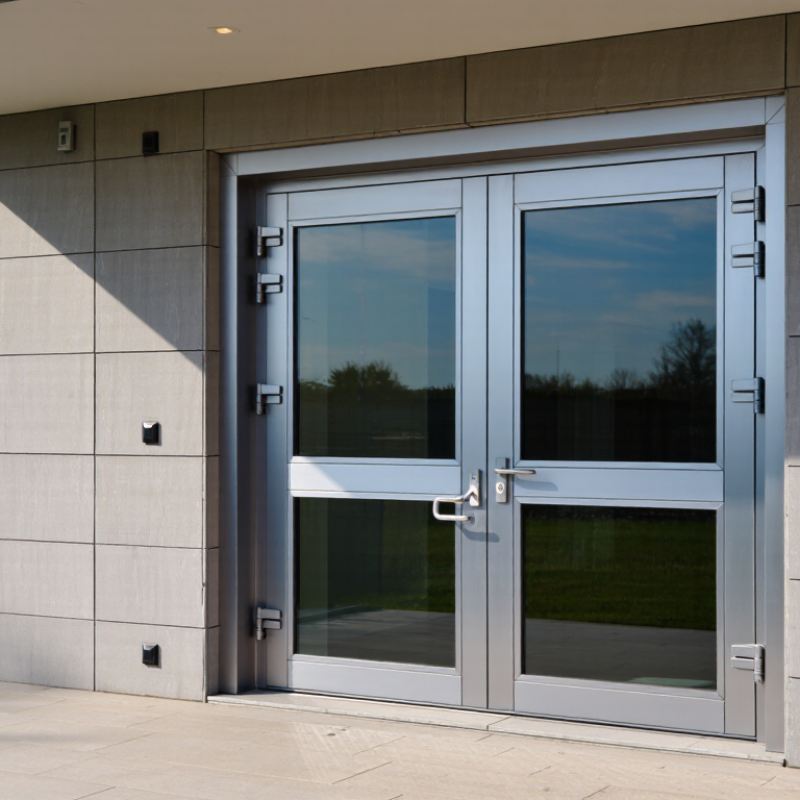
In 2026, a high-quality aluminum door means more than a sleek frame and glossy finish. During site inspections, I examine the complete assembly, not only the sales photograph. The aluminum should resist bending, while a thermal break reduces heat transfer through the frame. Good doors feel firm. They close smoothly without scraping, rattling, or excessive force. Small details matter.
Reliable powder coating should cover edges and corners evenly, with no bubbles, thin patches, or visible scratches. Drainage channels must guide rainwater away from the threshold. Strong hinges, accurate locks, durable seals, and correctly fitted glass also reveal manufacturing quality. Performance testing for air leakage, water resistance, wind pressure, and repeated opening provides more trustworthy evidence than attractive claims. Installation remains critical. I have seen expensive doors fail because the frame was poorly aligned or the surrounding wall moved.
Maintenance affects lifespan as much as material quality. With suitable installation and regular cleaning, a well-made aluminum door may serve for several decades, although climate and daily use change that estimate. Coastal air can attack fittings faster. Heavy traffic can wear hardware sooner. I once judged a door mainly by its rigid frame and overlooked the weak seal. That was a useful mistake. A careful evaluation should include repair access, replacement parts, safety glass specifications, and clear test documentation. Not always. Reliable quality leaves evidence.
Typical service-life ranges for key aluminum door components under normal residential and light-commercial use
A high-quality aluminum door system commonly provides about 30–45 years of service when the frame is properly finished, correctly installed, and protected from water intrusion. Hardware and weather seals usually require replacement sooner, while coastal exposure, heavy traffic, poor drainage, and inadequate maintenance can shorten the practical lifespan.
A high-quality aluminum door typically lasts 30 to 50 years when properly designed and maintained. Its frame resists rot, insects, and everyday moisture better than many wooden alternatives. In a busy entrance, the door may open hundreds of times each week. Strong hinges and accurate installation therefore matter as much as the aluminum itself.
The finish also affects service life. Powder-coated surfaces can retain their appearance for many years, but harsh sunlight and salty coastal air may cause earlier fading. I have seen well-maintained doors remain smooth after two decades, while neglected doors developed stiff locks and worn seals much sooner. Small problems grow quickly.
Cleaning the frame with mild soap every few months removes grit that can damage moving parts. Check the hinges, rollers, drainage holes, and weather seals at least once a year. Replace cracked seals before rain reaches the interior. A professional installer should also confirm that the frame is level and securely fixed. Even excellent materials perform poorly when installation is rushed. The estimate is not perfect. Usage, climate, hardware quality, and maintenance can shift the lifespan considerably. A door facing a covered porch may age differently from one exposed to constant wind and rain.
Aluminum doors can serve for 30–50 years, but quality alone does not decide their lifespan. European Aluminium life-cycle guidance commonly models aluminum building components over 50–60 years. That figure assumes proper installation, drainage, coating, and maintenance. Real projects may perform differently.
Coastal salt attacks fittings, fasteners, and exposed finishes. Industrial pollution can accelerate surface damage. Powder coating quality also matters; AAMA 2603, 2604, and 2605 specify different performance levels for architectural coatings. Higher-grade systems generally offer stronger resistance to fading and corrosion, though they are not maintenance-free.
Installation is often underestimated. A poorly aligned frame can strain hinges, seals, and locks every day. Water may collect beneath the threshold. Small defects become expensive problems.
Keep drainage channels clear. Clean the frame with mild soap twice yearly. Inspect gaskets and hardware after storms. A 2023 building-maintenance survey reported that preventive inspections can reduce major repair costs by around 20–30%, although results vary by building type and climate. That range deserves caution.
Thermal breaks can reduce condensation near the frame. Correct glass weight and hinge selection also protect long-term operation. In practice, a well-installed aluminum door may outlast its hardware. The frame is rarely the first failure.
| Lifespan Factor | Typical Service-Life Impact | Recommended Standard for a High-Quality Door | Practical Maintenance or Selection Tip |
|---|---|---|---|
| Expected Overall Lifespan | Approximately 20–30 years in normal residential use; 30–45 years may be achievable with quality materials, correct installation, and regular maintenance. | Rigid aluminum profiles, durable surface finishing, corrosion-resistant hardware, and replaceable seals and components. | Evaluate the condition of the frame, hinges, locks, rollers, weather seals, and drainage rather than relying only on the door’s age. |
| Aluminum Frame Quality | A well-designed frame resists warping and corrosion; thin or poorly assembled profiles may develop movement, air leakage, or alignment problems sooner. | Thermally broken profiles where energy efficiency is important, reinforced corners, accurate joints, and adequate wall-thickness for the door size and weight. | Check that joints are tight, corners are square, and the frame does not flex excessively during operation. |
| Surface Finish | High-quality powder coating or anodizing can remain serviceable for many years, while intense ultraviolet exposure, salt, and abrasion can shorten the finish’s appearance life. | A uniform, properly cured finish with documented suitability for the intended climate and exposure level. | Clean with mild soap and fresh water. Avoid abrasive pads, strong solvents, and acidic or alkaline cleaners. |
| Coastal or High-Salt Environment | Salt-laden air can accelerate corrosion of hardware, fixings, and damaged coating, potentially reducing service life if cleaning is neglected. | Marine-suitable finish, corrosion-resistant fasteners, protected drainage paths, and hardware selected for coastal exposure. | Rinse exposed surfaces with clean water regularly and inspect scratches, fasteners, hinges, and drainage openings. |
| Weather and UV Exposure | Strong sunlight, rain, freeze-thaw cycles, and large temperature changes can gradually affect finishes, sealants, gaskets, and adjustment. | UV-resistant finish, weather-rated seals, effective sill drainage, and correct allowances for thermal movement. | Keep drainage channels clear and replace cracked, hardened, or compressed seals. |
| Hardware Quality | Hinges, locks, rollers, handles, and closers often require service or replacement before the aluminum frame does. | Load-rated hardware with corrosion-resistant materials and replacement parts that remain available. | Lubricate moving parts only with a product approved for the hardware and tighten or adjust components when needed. |
| Installation Quality | Poor installation can cause premature rubbing, leakage, frame distortion, failed seals, and uneven load distribution even when the door itself is well made. | A level, plumb, square, and adequately supported opening with correct shimming, anchoring, flashing, and perimeter sealing. | Have the door installed by a qualified professional and verify smooth operation before final sealing and handover. |
| Frequency of Use | A lightly used residential entrance generally experiences less wear than a busy entrance in an apartment building, school, shop, or office. | Hardware and door closers rated for the expected number of operating cycles and door weight. | Inspect high-traffic doors more frequently and address looseness, scraping, or delayed closing promptly. |
| Cleaning and Maintenance | Regular cleaning and adjustment help prevent buildup, corrosion, air leakage, water infiltration, and unnecessary hardware wear. | A documented inspection routine with accessible drainage, adjustable hardware, and replaceable weather seals. | Clean at least twice a year in ordinary conditions; inspect more often in coastal, industrial, dusty, or high-traffic locations. |
| Glass and Glazing System | The frame may remain usable while glazing seals, beads, gaskets, or insulated glass units need repair or replacement. | Correctly sized glazing, durable gaskets, secure drainage, and glass appropriate for the door’s size, location, and safety requirements. | Look for condensation between insulated glass panes, loose beads, cracked gaskets, or water entry. |
| Warning Signs of Early Replacement | Persistent leaks, severe corrosion, cracked or distorted profiles, failed hardware, poor security, or repeated alignment problems may indicate advanced deterioration. | A repairable design with replaceable hardware and seals, supported by clear installation and maintenance information. | Obtain a professional assessment when structural movement, water penetration, or locking failure cannot be corrected by adjustment. |
A high-quality aluminum door may serve for 20–30 years, but exposure and maintenance matter greatly. The National Association of Home Builders’ Life Expectancy of Home Components report estimates aluminum windows at approximately 15–20 years. A well-protected door may last longer. Coastal air, standing water, and poor installation can shorten that period.
Watch the door during daily use. A handle that feels loose, hinges that squeak repeatedly, or a frame that rubs signals alignment trouble. Visible corrosion around joints deserves attention. Moisture beneath the threshold may indicate failed seals or drainage. If daylight appears around the edges, the weatherstripping may no longer block drafts. The U.S. Department of Energy recommends replacing worn weatherstripping to improve comfort and reduce unwanted air leakage. A door can look attractive and still perform poorly. That is easy to miss.
Tips: Clean the frame with mild soap twice yearly. Check screws, hinges, drainage holes, and seals after heavy rain. Repair small corrosion early. Replace the door when the frame is distorted, water enters repeatedly, or repairs cost nearly as much as a new installation. Professional inspection is sensible, though not always necessary for a minor squeak. My practical caution: do not judge lifespan by appearance alone; test closing pressure, seal contact, and threshold stability.
2026 Best High Quality Aluminum Door What Is Its Lifespan?
An aluminum door can last decades, but neglect shortens that promise. NAHB’s Life Expectancy of Home Components estimates aluminum windows at about 45 years under normal conditions. That figure is not a door warranty. Coastal salt, poor drainage, heavy traffic, and low-grade hardware can reduce service life. The report is also dated. That deserves caution.
Clean the frame and threshold every three months. Use mild soap, clean water, and a soft cloth. Remove grit from the track before it scratches the finish. Inspect seals twice yearly. Replace cracked gaskets early. The U.S. Department of Energy reports that windows can represent 25–30% of household heating and cooling energy use. A glazed door can contribute to that loss. Check weatherstripping, alignment, and latch pressure with a simple paper test.
A maintenance log helps. Record dates, loose screws, water marks, and closing resistance. Lubricate approved moving parts, but never flood the lock cylinder. Ask a qualified installer to adjust hinges when the panel drags. AAMA/WDMA/CSA 101/I.S.2/A440 testing evaluates air, water, and structural performance. Inspect those same failure points at home. The 2024 IECC also uses U-factor and solar heat gain requirements by climate zone. These values guide replacement choices, not maintenance alone. I used to overlook the threshold. That small mistake can invite water and corrosion.
A quality door has a rigid frame, smooth operation, strong hinges, secure locks, and durable seals. It should close without scraping, rattling, or excessive force. Small details matter.
It may last 30 to 50 years with suitable installation and regular maintenance. Heavy traffic, salty air, and poor hardware can shorten that estimate. The number is not guaranteed.
A poorly aligned frame may cause dragging, leaks, or lock problems. The surrounding wall can also shift. Even excellent materials may fail when installation is rushed.
Powder coating should cover edges and corners evenly. Look for bubbles, thin patches, scratches, or early fading. Coastal air and strong sunlight can damage finishes faster.
Keep drainage channels clear and clean the threshold every three months. Check seals twice yearly. Replace cracked gaskets before rain reaches the interior. Small leaks spread.
Use mild soap, clean water, and a soft cloth. Remove grit from tracks and hinges. Lubricate approved moving parts carefully. Do not flood the lock cylinder.
Inspect weatherstripping, alignment, and latch pressure with a simple paper test. A glazed door may increase heating and cooling losses. Glass and frame specifications deserve careful review.
Request test documents covering air leakage, water resistance, wind pressure, and repeated opening. Check safety glass details and replacement-part access. Attractive photographs prove very little.
Watch for uneven gaps, stiff locks, water marks, loose screws, and frame movement. I once trusted a rigid frame and missed a weak seal. That mistake changed my inspection habits.
A high-quality aluminum door in 2026 is defined by strong, corrosion-resistant materials, precise manufacturing, reliable hardware, effective weather sealing, smooth operation, and energy-efficient design. In general, what is the lifespan of a high-quality aluminum door? With proper installation and regular care, it can typically serve for 20 to 40 years or even longer. Its actual lifespan depends on aluminum alloy quality, surface treatment, climate, usage frequency, installation accuracy, drainage, and maintenance habits.
Common signs of wear include difficult opening or closing, loose hinges, damaged seals, visible corrosion, frame distortion, air leakage, and reduced security. Early repairs can often prevent more serious damage, while severe warping or structural deterioration may require replacement. To extend service life, clean the frame regularly, keep tracks and drainage channels clear, lubricate moving parts, inspect seals and hardware, tighten loose components, and address moisture or mechanical problems promptly. These simple measures help preserve appearance, performance, safety, and long-term value.

Med Door