A quiet bedroom begins at the doorway, but the door rarely works alone. The frame, hinges, threshold, seals, and wall construction all influence acoustic performance. That is why understanding what to look for in a soundproof bedroom door requires more than choosing a heavy slab.
The World Health Organization recommends bedroom noise below 30 dB(A) at night for good sleep. Its Environmental Noise Guidelines for the European Region connect nighttime noise with sleep disturbance and health risks. These findings make door selection practical, not decorative. A solid-core or acoustic-rated door can reduce airborne noise, especially when paired with continuous compression seals and an automatic drop seal. Check the tested Sound Transmission Class rating under ASTM E413. However, STC values come from laboratory conditions. Real rooms may perform worse.
Small gaps matter.
Acoustical designer John Storyk is widely associated with this useful warning: “There is no such thing as soundproofing; there is only sound isolation.” His point changes how buyers should evaluate products. A door rated at STC 45 cannot compensate for a hollow frame or a visible threshold gap. In practice, I would inspect the seal contact with a flashlight and listen for traffic noise near the jamb. It is simple, but often overlooked.
This guide examines door mass, perimeter seals, frame compatibility, installation quality, ventilation conflicts, and independently verified ratings. Some manufacturers present impressive numbers without explaining test conditions. That deserves caution. The best choice may not be the most expensive door. It should be the complete, properly fitted doorway that matches the noise source and the bedroom’s construction.
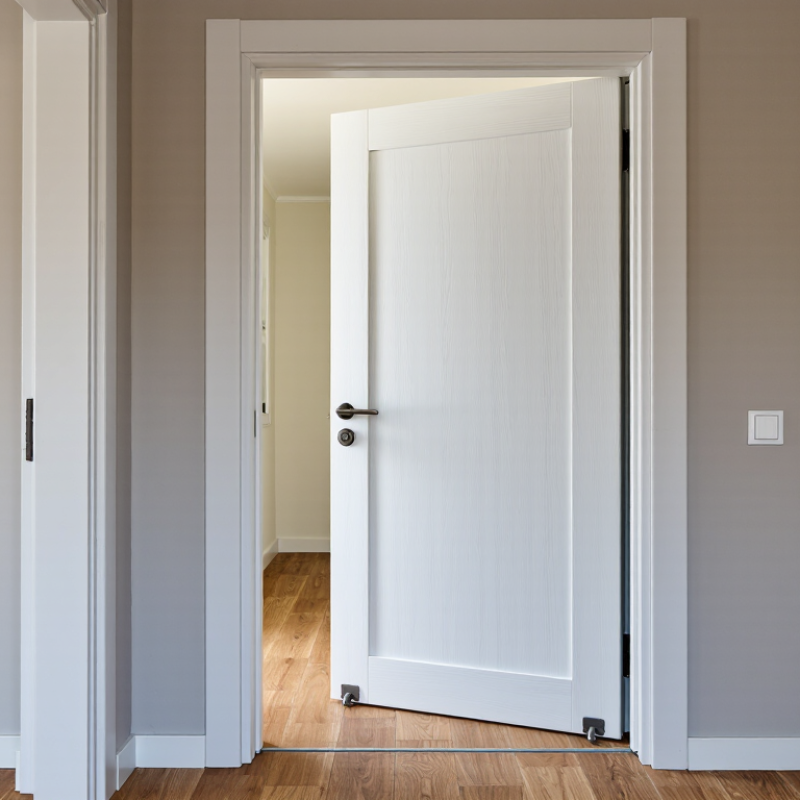
A bedroom door blocks sound only when its entire assembly works together. The door leaf, frame, hinges, seals, and threshold all matter. A solid-core door usually performs better than a hollow-core model because it adds mass. However, mass alone is not enough. A small gap beneath the door can undermine expensive materials.
Look for a tested Sound Transmission Class (STC) rating. ASTM E90 measures airborne sound transmission in laboratory conditions, while ASTM E413 assigns the STC rating. These results provide useful comparisons, but they do not perfectly predict home performance. The World Health Organization’s Night Noise Guidelines for Europe recommend less than 30 dB(A) indoors at night for good sleep. That target concerns the whole room, not only the door. A perfect rating on paper can still disappoint.
Tips: Check the frame with a flashlight at night. If light passes through, sound probably does too. Use continuous compression seals on the sides and top. Add an automatic door bottom or a close-fitting threshold. Avoid loose fabric strips; they often leave hidden air paths. The U.S. Department of Energy’s air-sealing guidance repeatedly identifies uncontrolled gaps as major performance weaknesses. Measure the existing frame before ordering. Small errors create noticeable leaks. Some doors also close poorly after installation, which is an overlooked problem worth correcting.
A soundproof bedroom door begins with mass and a dense core. Hollow doors often behave like drums, especially near hinges and locks. Solid timber, composite mineral cores, or layered gypsum-based panels add weight and reduce vibration. Mineral wool can improve absorption inside a sealed door structure. However, core material alone cannot stop every sound path.
ASTM E90 measures airborne sound transmission in laboratories, while ASTM E413 converts results into Sound Transmission Class ratings. These ratings compare door assemblies, not core materials alone. The World Health Organization’s 2018 Environmental Noise Guidelines recommend keeping bedroom nighttime noise below 40 dB Lnight to protect sleep. That target is difficult to reach with a heavy door and a weak frame. A continuous acoustic seal, automatic door bottom, and properly fitted threshold matter just as much. I once underestimated a 3-millimeter gap; it was small, but voices still entered clearly.
Tips: Choose a door with documented laboratory results, not vague “noise blocking” language. Ask whether testing included the frame, seals, and hardware. Check the perimeter with a thin piece of paper; it should resist slightly when the door closes. Avoid glass panels unless they use laminated acoustic glazing. Reflective surfaces can also make a room feel louder, so a soft curtain near the doorway may help. The imperfect part is installation: even premium materials can underperform when the frame twists or the seal compresses unevenly.
A solid door is only the beginning. In practice, the weakest point is often the seal, not the panel. I inspect the perimeter with a flashlight, then close the door on a thin sheet of paper. If the paper slides freely, compression is probably inadequate. Continuous magnetic or acoustic seals usually perform better than a simple brush strip. The threshold matters too. A visible undercut can let voices and television noise pass beneath the door.
The frame must stay rigid and square. Even a small twist can create uneven sealing pressure. Use shims behind the hinges and latch area, rather than relying on expanding foam alone. Acoustic sealant should close the frame-to-wall joint without becoming brittle. ASTM E90-23 measures laboratory sound transmission loss, while ASTM E413-22 converts results into Sound Transmission Class ratings. These ratings are useful, but they do not fully predict bedroom performance. Field workmanship can reduce laboratory results.
Installation quality decides whether specifications become reality. The U.S. Department of Housing and Urban Development’s Noise Guidebook identifies doors as frequent weak points in sound-isolation assemblies. A 10 dB reduction is commonly perceived as roughly half as loud, according to acoustical guidance from the National Research Council Canada. That difference can feel significant at night. Still, I would not promise silence. Hinges, wall gaps, ventilation, and poor alignment can defeat an expensive door. One overlooked screw or an uneven threshold can become the night’s loudest detail.
When choosing a soundproof bedroom door, start with its acoustic rating, not its appearance. STC measures airborne sound reduction in many North American specifications. A higher STC generally means better resistance to voices, television noise, and hallway sounds. In other regions, you may see Rw, calculated under ISO standards. These ratings are related, but they are not identical. Compare like with like.
The test method matters. ASTM E90 and ISO 10140 evaluate sound transmission in controlled laboratory conditions. ASTM E413 and ISO 717-1 help convert test results into rating values. Ask whether the rating applies to the complete door assembly. That includes the slab, frame, seals, hinges, and threshold. A door leaf tested alone may perform differently after installation. Look closer. Small gaps matter.
In real bedrooms, installation often decides the result. Continuous compression seals should meet evenly around the frame. The bottom edge needs a reliable drop seal or threshold without creating a trip hazard. Wall construction, vents, and shared framing can also carry sound around the door. This is called flanking transmission. A high-rated door cannot correct every weak path.
I have seen carefully specified doors underperform because the frame was slightly twisted. That detail is easy to miss. Performance ratings also depend on frequency, so a door may reduce speech well but struggle with bass. Request laboratory reports, field data, and installation requirements before purchasing. Treat impressive numbers carefully. A practical, well-installed assembly usually beats a stronger rating fitted poorly.
Sound Transmission Class (STC) is a laboratory rating used to compare how effectively a door reduces airborne sound transmission. Typical performance ranges vary by construction: hollow-core doors generally provide limited sound reduction, while solid-core and acoustically engineered doors can achieve higher ratings. Actual field performance may be lower because of gaps, frames, seals, and installation quality. Test results should be based on recognized laboratory procedures such as ASTM E90, with classification determined under ASTM E413.
Choosing the right soundproof bedroom door begins with identifying the noise you actually hear. Voices from a hallway need different control than traffic rumbling through a wall. A heavy solid-core door usually blocks more sound than a lightweight hollow door. However, the door slab is only part of the solution. Sound can slip through small gaps around the frame, hinges, and threshold.
Look for continuous perimeter seals and a reliable automatic door sweep. These details matter when you can see light beneath the door at night. A higher acoustic rating may help, but it describes tested conditions, not every bedroom. The frame, wall construction, and installation can change the result. For bass-heavy noise, even an excellent door may provide limited improvement.
Think about daily use as well as sound reduction. A bedroom door should open smoothly, latch securely, and avoid creating a difficult exit. Check local safety requirements before changing locks, thresholds, or ventilation. Measure the existing frame carefully, including its depth and squareness. A small installation error can leave a visible gap.
Test before spending heavily. Play a steady hallway sound, close the door, and listen from the bed. A phone app can show rough differences, but it is not a laboratory instrument. I once focused too much on the door’s weight and underestimated the frame leaks. That mistake was useful. Good seals and careful fitting often matter more than impressive specifications.
Dense materials usually perform better than hollow panels. Solid timber, mineral cores, and layered gypsum panels add mass. Mineral wool can absorb sound inside a sealed structure. The core helps, but it cannot block every sound path.
Seals often matter more than the door panel. Continuous acoustic or magnetic seals close small perimeter gaps. A simple brush strip may leave sound pathways. Even a 3-millimeter gap can carry voices clearly.
Close the door on a thin piece of paper. The paper should resist slightly when pulled. You can also inspect the perimeter with a flashlight. Free movement suggests weak compression.
The frame should remain rigid, square, and properly aligned. A twisted frame creates uneven sealing pressure. Shims behind hinges and the latch area can improve stability. Expanding foam alone is not enough.
STC is common in North American specifications. Rw appears in many international specifications. These ratings are related, but they are not identical. Compare the same rating type whenever possible.
No. Laboratory results may test a complete assembly or only the door slab. Ask whether testing included the frame, seals, hinges, and threshold. Installation can reduce real-world performance.
No door can promise silence. Hinges, vents, wall gaps, and shared framing may carry sound around it. Bass can also pass differently from speech. I would be cautious with impressive numbers.
Use a reliable drop seal or threshold along the bottom edge. Avoid creating a trip hazard. Seal the frame-to-wall joint with suitable acoustic sealant. Uneven compression can ruin an otherwise strong assembly.
Glass panels can weaken the assembly unless they use laminated acoustic glazing. Hard reflective surfaces may also make a room feel louder. A soft curtain near the doorway can help. It is not a complete fix.
Choosing a soundproof bedroom door requires more than selecting a thick or heavy design. The first step is understanding how sound travels through air, gaps, and the door structure itself. Core materials such as solid wood, dense composite layers, and acoustic cores can reduce noise transmission more effectively than lightweight hollow doors. When considering what to look for in a soundproof bedroom door, pay close attention to compression seals, door sweeps, the frame, and the quality of installation, since even small gaps can significantly weaken performance.
Acoustic ratings and performance standards can help compare doors based on their tested ability to reduce sound. However, the best choice depends on your bedroom’s specific needs, including outside traffic, household activity, privacy concerns, and available space. A properly fitted door with reliable seals and a suitable acoustic rating will usually provide better results than an expensive door installed poorly. Consider noise levels, appearance, ventilation, budget, and long-term durability before making a final decision.

Med Door